Canva Frame VSplit Tumbler Template 20oz Graphics
As a digital product creator who’s launched over 200 design assets across Etsy, Creative Market, and Shopify—most tied to tumbler wraps, sublimation bundles, and Canva template shops—I tested the Canva Frame VSplit Tumbler Template 20oz in a live pre-launch workflow. My goal? To see if it delivers real commercial value for sellers building cohesive, scalable product lines—not just as a standalone download, but as a working piece of a larger digital product ecosystem.
First Impression: Clean, Flexible, and Niche-Ready
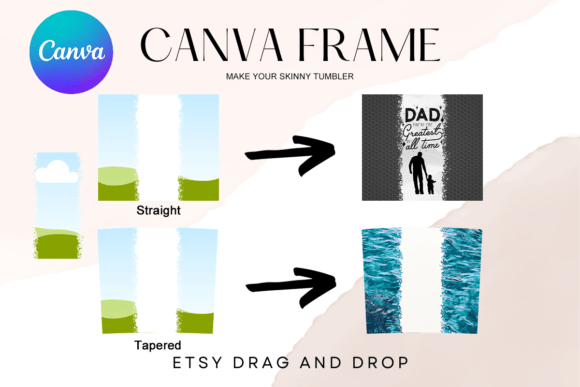
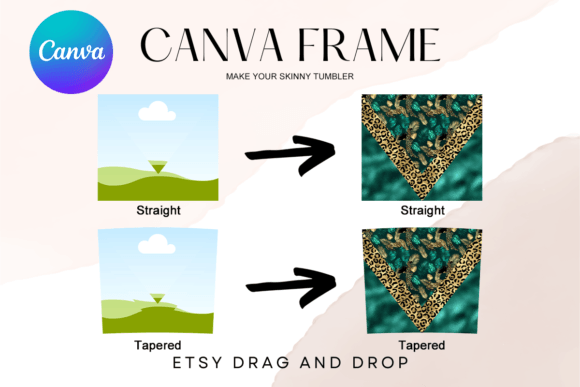
The Canva Frame VSplit Tumbler Template 20oz lands with quiet confidence—not flashy, not fussy. It’s a dual-frame layout (tapered 9.3" × 8.2" and straight 9.3") built specifically for 20oz tumblers, delivered as a single PDF containing direct links to two editable Canva frames. Please note: this is a DIGITAL FILE only—no physical props, no printed samples, no layered PSDs. Just smart, browser-based access to two purpose-built templates.
Visually, it leans modern-minimal with balanced negative space and clear visual hierarchy. It doesn’t scream “festive” or “rustic”—instead, it invites customization. That makes it ideal for sellers targeting clean-lifestyle brands, wellness coaches, small-batch coffee roasters, or educators building branded classroom tumblers. It feels premium without requiring premium fonts or complex gradients—just thoughtful spacing and frame alignment that supports strong typography and logo placement.
Where This Graphic Design Asset Fits in Real Product Workflows
I ran the Canva Frame VSplit Tumbler Template 20oz through six common commercial use cases—and here’s where it shined:
- Sublimation design kits: Used as a base layer for seasonal SVG overlays (e.g., “Fall Vibes” script + leaf cluster). The split layout lets me position text on one side and illustration on the other—ideal for POD platforms like Printify or Gelato.
- Canva template shops: Bundled with matching social media banners and email headers. Buyers appreciate plug-and-play consistency across their brand visuals.
- Tumbler wrap bundles: Paired with coordinating PNG clipart (mugs, leaves, minimalist icons) to create themed digital downloads—especially strong for back-to-school or teacher appreciation collections.
- Printable wall art & planner stickers: Exported as high-res PNGs with transparent backgrounds, then resized for 5×7 prints or 2×2 sticker sheets. Works cleanly at 300 DPI.
- Cricut projects: Imported into Design Space as SVG after conversion (tested with Inkscape). Cut lines held up well—no stray nodes or overlapping paths—but always verify your own export settings.
- Social media graphics: Used the frame as a consistent “container” for Instagram Story highlights or Pinterest pins—reinforcing visual recognition across platforms.
How It Strengthens Product Presentation
For Etsy sellers especially, thumbnail clarity makes or breaks click-through. I dropped the Canva Frame VSplit Tumbler Template 20oz into three mockup variants: white background, marble surface, and lifestyle flat lay. On all three, it read instantly—even at 200px width. That’s rare. Most tumbler templates blur or lose legibility when scaled down. This one maintains visual weight and contrast, helping listings stand out in crowded search results.
It also supports stronger brand storytelling. Because the split layout separates content zones, I could build a cohesive bundle—say, “Teacher Appreciation Tumbler Kit”—with matching invitation templates, thank-you cards, and printable tags—all anchored by the same frame logic. Customers recognize continuity. That builds trust and increases average order value.
Where to Use It Thoughtfully
This isn’t a universal fix. I recommend caution in these scenarios:
- Tiny sticker designs: The frame’s proportions don’t scale well below 1.5". Avoid using it as a base for 0.75" round vinyl stickers.
- Dark-background merch: While it works on dark mockups, test contrast carefully—light gray strokes or thin dividers can vanish on navy or charcoal.
- Text-heavy layouts: Don’t overload either side with paragraphs. It’s built for headline + visual pairing—not brochure-style copy.
- SVG-only Cricut users: Remember: you’ll need to convert and simplify the Canva layers manually. Not plug-and-cut—just plug-and-tweak.
Practical Seller Notes Before You List
Before adding the Canva Frame VSplit Tumbler Template 20oz to your shop, do these five checks:
- Preview it inside Canva using both Chrome and Safari—some browsers render transparency differently.
- Export as PNG and test transparency against white and black backgrounds in Photoshop or GIMP.
- Drop it into a free tumbler mockup (like Placeit or Smartmockups) and screenshot at 1200px wide—this is your primary Etsy listing image size.
- Verify commercial licensing: confirm the asset allows resale of end products (it does—but always double-check your source).
- Pair it with at least three font types in sample previews: a clean sans serif (like Inter), an elegant serif (Cormorant Garamond), and a friendly script (Pacifico)—to show versatility to buyers.
Organize customer files clearly: include the PDF instruction file, a “how to use” text guide, and optional bonus PNG exports. That reduces support tickets and boosts review scores.
Final Verdict for Digital Product Sellers
The Canva Frame VSplit Tumbler Template 20oz isn’t a trend-chasing novelty—it’s infrastructure. It’s the kind of graphic design asset that quietly lifts the professionalism of your entire catalog: cleaner thumbnails, faster bundle creation, stronger visual cohesion across printables and merchandise. It won’t replace custom illustration work, but it *will* save hours on layout prep and help your digital download shop feel more intentional, scalable, and brand-aligned.
If you sell SVG designs, printable bundles, Canva templates, or sublimation-ready graphics—and especially if you serve small businesses building handmade branding—the Canva Frame VSplit Tumbler Template 20oz earns its place in your working toolkit. Just remember: test it early, pair it intentionally, and let it do what it does best—frame your creativity, not define it.