Puzzle Stacked Alphabet Canva Frame
A Designer’s First Glance: Playful, Precise, and Purpose-Built
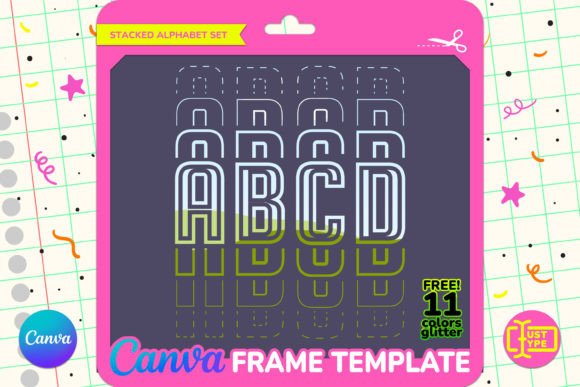
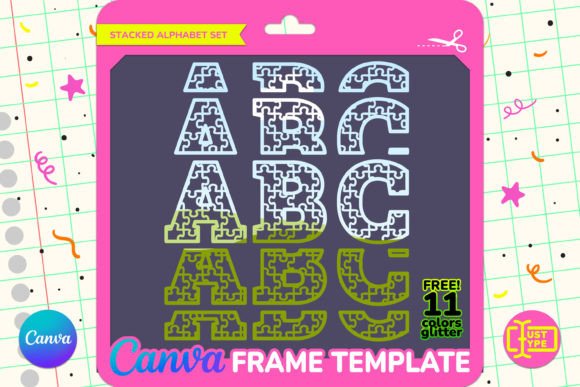
When I opened Puzzle Stacked Alphabet Canva Frame, my first thought wasn’t “cute” — it was “engineered.” The letters don’t just sit side by side; they interlock like puzzle pieces, with subtle notches, staggered heights, and intentional negative space between segments. That visual rhythm signals something important: this isn’t a decorative monogram — it’s a compositional tool. As an embroidery designer who’s stitched hundreds of custom baby onesies, boutique tote bags, and Etsy-ready patches, I immediately saw its sweet spot: personalized gifts where charm meets clarity, and where the design itself tells a story before a single stitch is made.
Real Project Test: A Custom Embroidered Tote for a Local Bakery
Last week, I used Puzzle Stacked Alphabet Canva Frame to build a logo variant for “Hearth & Crumb,” a small-batch bakery launching branded canvas totes. Instead of forcing their serif logo into rigid letterforms, I dropped their signature wheat motif into the “H” and a tiny croissant illustration into the “C.” The result? A cohesive, hand-crafted look that felt intentional — not templated. When stitched on medium-weight canvas with 60-weight rayon thread and tear-away + cut-away stabilizer combo, the stacked structure held up beautifully: no distortion in corners, clean satin-stitched edges on each letter segment, and enough breathing room between pieces to prevent thread buildup. Customers noticed it right away — not just the brand name, but how the design *moved* with the fabric.
Where It Shines (and Where to Pause)
Puzzle Stacked Alphabet Canva Frame excels in projects where legibility and personality share equal weight:
- Custom apparel: Works cleanly on sweatshirt fronts, crewneck tees, and aprons — especially when paired with low-density fill stitches or strategic open areas.
- Personalized gifts: Baby embroidery on onesies or burp cloths benefits from the friendly scale and built-in visual interest — no need for extra flourishes.
- Embroidered patch foundations: Its segmented layout makes it ideal for turning into sew-on or iron-on patches with crisp, defined letter boundaries.
- Holiday embroidery and nursery decor: The puzzle theme subtly nods to growth, learning, and connection — resonating well with baby showers, teacher gifts, or kindergarten classroom banners.
- Craft business branding: Small shop owners can use it across product tags, packaging labels, and social mockups without losing recognizability.
But — and this matters — it’s not universally forgiving. On stretchy fabric like jersey knits, tight corners and narrow puzzle tabs can pucker if stabilizer isn’t layered precisely. On dark fabric, fine interior details (like thin connecting lines between letters) may vanish unless thread contrast is carefully chosen. And for curved surfaces like caps, the bottom row of letters often needs manual repositioning or slight scaling to avoid distortion — the Canva template gives flexibility, but machine embroidery still demands physical awareness.
What It Adds to Your Finished Product — Beyond Aesthetics
This isn’t just about prettiness. Puzzle Stacked Alphabet Canva Frame quietly elevates perceived value. Because the letters interact rather than float, customers read “hand-designed,” not “drag-and-drop.” That impression builds trust — especially for Etsy sellers and handmade shops where buyers pay more for authenticity. It also supports brand consistency: you’re not stuck with one fixed font; you’re working within a system that lets patterns, textures, or even photos live *inside* the typography. That flexibility translates directly to stronger printable mockups, more engaging product listings, and repeatable design assets across your craft business.
Practical Embroidery Designer Notes
Before stitching your first Puzzle Stacked Alphabet Canva Frame project, here’s what I do — every time:
- Test on scrap fabric using your exact thread, stabilizer, and machine settings — especially if stitching on textured or lightweight materials.
- Check thread color contrast in both natural and artificial light; some puzzle gaps disappear on dark backgrounds unless you boost brightness or add outline stitches.
- Review stitch density in tight junctions — high density in small puzzle tabs can cause stiffness or thread breakage on delicate items like baby embroidery.
- Confirm hoop size compatibility; while the frame scales well, extremely narrow letters may require re-hooping for dense sections on smaller hoops.
- Inspect small details at 200% zoom in your embroidery software — those subtle notches define the puzzle feel, and missing them flattens the whole concept.
- Test black-and-white mockups to verify readability — if it doesn’t hold up without color, it won’t translate reliably across fabric types.
- Compare light vs. dark fabric backgrounds using actual swatches, not just screen previews.
- Use proper stabilizer: medium cut-away for stable fabrics, hybrid (cut-away + tear-away) for stretch or drape.
- Verify licensing before selling finished products or digital embroidery files — since this is a Canva Graphics template, confirm commercial use rights apply to your intended output.
Final Thought: A Tool That Respects Your Craft
Puzzle Stacked Alphabet Canva Frame doesn’t try to be everything. It’s not a script font, not a bold display type, not a minimalist sans-serif. It’s a thoughtful, modular system — one that invites collaboration between your eye, your machine, and your customer’s expectations. Whether you’re stitching a holiday embroidery gift for a friend or building scalable design assets for your small shop product line, it rewards attention to detail and delivers a quiet kind of professionalism. In a market flooded with generic fonts and overused motifs, that’s not just practical — it’s valuable.